Hydro Excavation in Michigan
How hydrovac digging works, when it's the right tool, and what's different about doing it in Michigan.
Request Quotes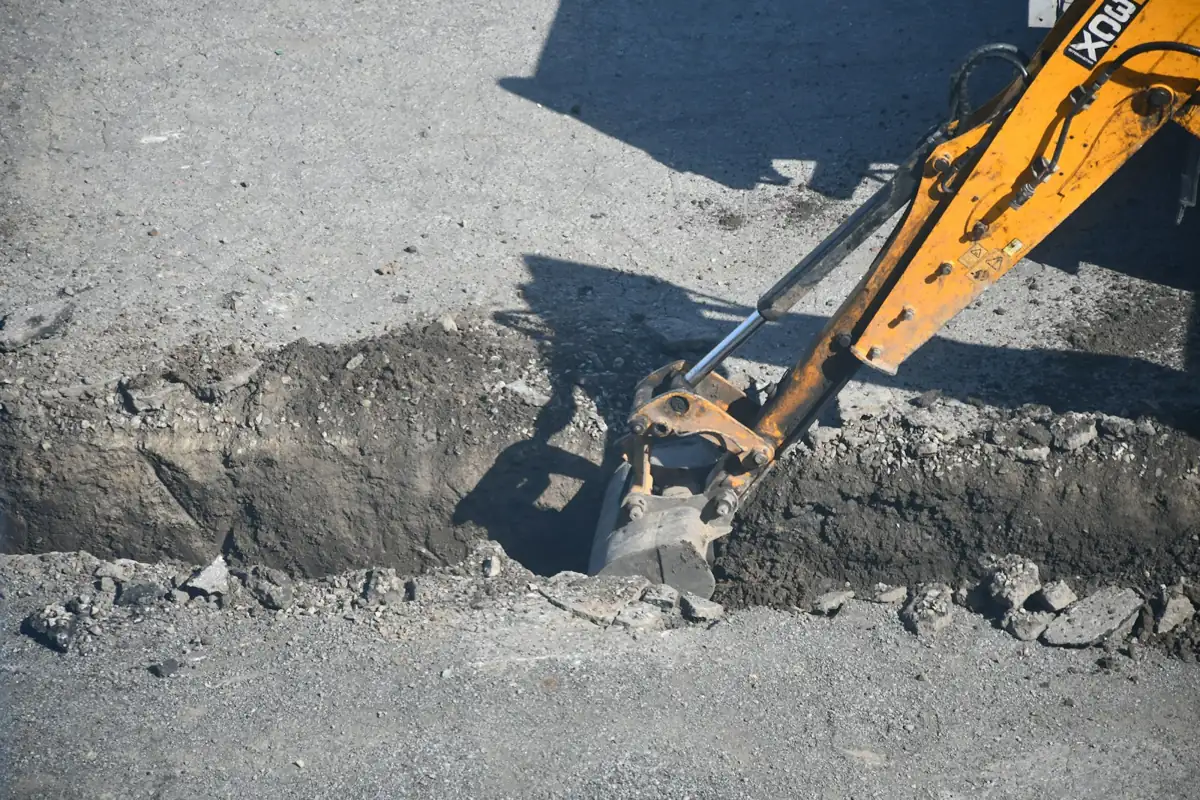
How a hydrovac works
A hydro excavation truck carries a water tank, a high-pressure pump, a vacuum system (a positive-displacement blower or fan), and a debris tank. An operator uses a handheld wand to cut the soil with pressurized water while a large-diameter boom hose vacuums the resulting slurry into the debris tank. The spoil is later hauled to an approved disposal or dewatering site.
Hydro vs mechanical vs air excavation
| Hydro excavation | Air excavation (air-vac) | Mechanical (backhoe/excavator) | |
|---|---|---|---|
| Risk to buried lines | Low when done properly | Low when done properly | Highest; why the law requires soft exposure first in the caution zone |
| Hard clay / compacted soil | Cuts well | Slower in dense clay | Fast |
| Frozen ground | Works with heated water | Difficult | Possible, but frost increases strike risk |
| Spoil | Wet slurry; needs hauling and disposal | Dry; can often be reused as backfill | Dry; stays on site |
| Cost per hour | Higher; one guide puts it at 1.5–3× mechanical | Varies | Lowest |
Michigan-specific factors
Frost and winter digging
Michigan's residential code requires exterior footings at least 42 inches below grade for frost protection, which gives a sense of how deep frost can reach. Winter hydro excavation relies on trucks with boilers that heat the water to cut frozen ground. Cost guides note that frozen ground, clay, and rock can slow production substantially, and winter hot-water work may cost more.
Soils vary across the state
Much of Michigan's surface is glacial deposits, ranging from dense clay till and old lake-bed clays (common in Southeast Michigan) to sandy and gravelly outwash (common in parts of West and Southwest Michigan). Clay generally digs slower and produces more slurry. Loose sand digs fast but can slough into the hole.
MISS DIG soft excavation
Under the MISS DIG Act, "soft excavation" includes "vacuum excavation methods." Marked facilities within the 48-inch caution zone must be exposed by soft excavation before power equipment is used. Details →
Disposal
Hydrovac slurry has to go somewhere. Ask how the operator handles disposal and whether the site has known contamination that affects where spoil can go.
Sources: MISS DIG Underground Facility Damage Prevention and Safety Act, 2013 PA 174 (MCL 460.721–460.733); Michigan Residential Code, Section R403.1.4 (as adopted under Mich. Admin. Code R 408.30522); Hydrovac Hotline, “Hydrovac Cost: 2026 Pricing Guide”.
Request hydrovac quotes
Tell us about your job and we'll connect you with a hydro excavation provider that covers your part of Michigan.